Organizations today face a landscape of ever-shifting hazards and promising horizons. A proactive approach to scanning for both threats and opportunities allows businesses to thrive rather than merely survive. By adopting a comprehensive Risk Radar, leaders can transform uncertainty into strategic advantage.
Understanding the Risk Radar Concept
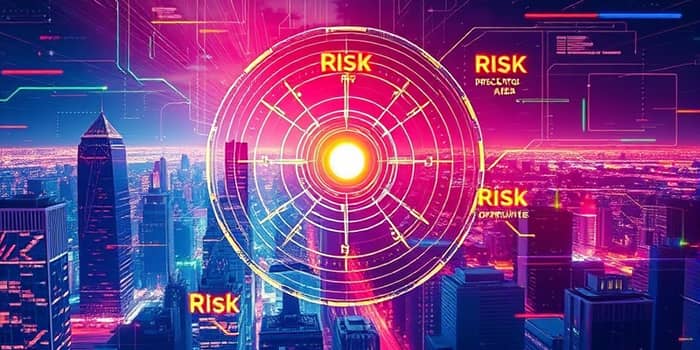
A Risk Radar is continuously scanning the environment to spot emerging signals, whether they signal danger or potential gains. Unlike traditional risk management, which often reacts after issues arise, this approach emphasizes foresight and agility.
The core of this system lies in aligning internal capabilities with external realities. By mapping trends across geopolitical, technological, and operational domains, organizations build proactive risk management framework that supports early decisions and resilient strategies.
Risk Management Cycle
Effective risk radar implementation follows a structured sequence. Each phase builds on the previous to ensure no risk or opportunity slips through the cracks.
- Identification: Discover signals and events worth attention
- Assessment: Rate likelihood and potential impact quantitatively
- Prioritization: Allocate resources to highest-value areas
- Mitigation/Response: Design actions to reduce harm or capitalize
- Continuous Monitoring/Review: Update insights and refine tactics
This cycle ensures that risk radar remains a dynamic, living tool rather than a static report.
Key Methodologies
Several proven techniques underpin a robust Risk Radar. Organizations can tailor these methods to their size, industry, and risk appetite.
Scenario planning exercises explore a range of futures, allowing leaders to visualize responses to extreme but plausible events. By simulating outcomes in controlled workshops, teams gain clarity on critical decision points.
The 5×5 Risk Matrix tool offers a simple yet powerful visualization. Risks score from 1 to 5 on both likelihood and impact axes, creating a grid that highlights which items demand immediate attention.
Implementing early warning systems powered by AI can detect subtle signs of change. Triggers configured on thresholds allow instant alerts when risk signals exceed acceptable limits.
Technology and Tools
Modern Risk Radars harness advanced analytics and automation to handle volumes of data from diverse sources. From news feeds and social media to internal systems, every piece contributes to a unified view.
Data platforms can achieve high precision in alerting decision-makers, with some AI systems reaching up to 99.98% relevance in supply chain risk identification. Dashboards and visualizations translate complex findings into actionable insights.
Collaborative risk platforms enable cross-functional teams to document, comment on, and update risk items in real time. This shared environment fosters a culture of shared risk awareness across geographies and departments.
Types of Risk Considered
- Financial: insolvency, liquidity shortfalls
- Operational: process failures, capacity constraints
- Cybersecurity: data breaches, ransomware attacks
- Regulatory/Compliance: privacy regulations, sanctions
- Reputational: brand-damaging incidents
- Natural Hazards: weather events, supply chain disruptions
- Geopolitical: trade wars, instability
- Vendor/Third-Party: supplier insolvency, quality lapses
- Technology/IT: legacy system failures, data quality issues
Best Practices and Strategic Actions
To maximize impact, organizations must embed risk radar processes into everyday operations. Assigning ownership at each stage ensures accountability and speed.
- Clear risk ownership and accountability for all items
- Continuous review cycles with iterative improvements
- Engaged stakeholders across the hierarchy
- Board-level oversight for critical emerging risks
- Cost-benefit analysis guiding control investments
Combining these actions with real-time feedback loops creates resilient, adaptive risk processes that evolve alongside the business.
Industry Case Examples
Leading retailers use AI-driven radars to monitor hundreds of data sources moment by moment. This approach enabled one global chain to divert shipments before a major port closure disrupted critical supplies.
Construction firms process billions of data points to assign financial health scores to each vendor. Early flags on low-scoring suppliers prevented costly project stoppages.
Financial institutions increasingly integrate third-party risk modules, ensuring that partners and fintech providers meet stringent security standards before entering new markets.
Emerging Trends and Future Outlook
As ecosystems become more interconnected, risks cascade across networks. Extended enterprise risk management focuses on partner resilience and joint scenario simulations. Regulatory technology (RegTech) automates sanctions screening and compliance checks.
AI and automation will further refine predictive capabilities, enabling systems to anticipate not just threats but also adjacent opportunities—such as new markets or product innovations arising from regulatory shifts.
Organizations that embrace these trends will gain a competitive edge through informed agility and robust resilience, turning risk radar intelligence into a strategic asset.
Conclusion
Building an effective Risk Radar demands commitment, technology, and collaboration. When executed well, it transforms uncertainty into actionable foresight, empowering organizations to navigate complex landscapes with confidence.
By adopting proven methodologies, integrating advanced tools, and embedding risk-aware culture, businesses can identify emerging threats and opportunities before they materialize—ensuring sustainable growth and resilience in an unpredictable world.
References
- https://eoxs.com/new_blog/risk-radar-proactive-strategies-for-effective-risk-management/
- https://sphera.com/solutions/supply-chain-risk-management/supplier-intelligence-solution/risk-radar/
- https://swise.ai/help/risk-management-model
- https://www.itonics-innovation.com/news/launch-of-risk-radar
- https://www.pwc.co.uk/services/forensic-services/insights/radar.html
- https://www.youtube.com/watch?v=5d286vMKMRw