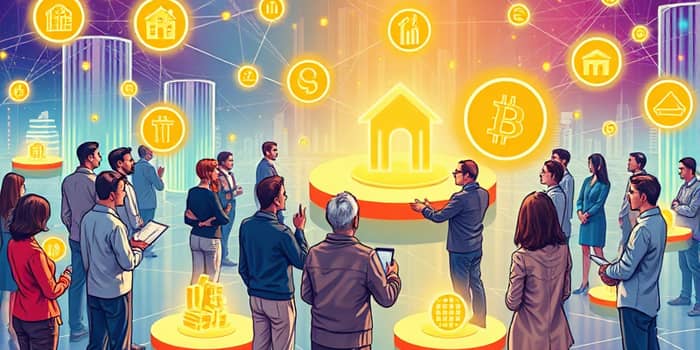
In a world where vast fortunes remain tied up in real estate, art collections, and rare collectibles, a groundbreaking shift is underway. Through the power of blockchain and digital tokens, investors can now access and trade assets that once stood behind high barriers to entry. This revolution promises to transform wealth management, enabling anyone to participate in markets that have long been the domain of institutions and the ultra-wealthy.
What Asset Tokenization Means
Asset tokenization is the process of representing ownership rights to real-world or digital assets with digital tokens on a blockchain. These tokens act as secure stand-ins for property titles, shares of fine art, or even stakes in luxury goods. By harnessing distributed ledger technology, platforms create a transparent and immutable record of transactions that can be audited and verified in real time.
Once tokenized, an asset can be divided into thousands of tradable units. Investors gain the freedom to buy or sell fractions of assets, unlocking value that previously lay dormant within illiquid markets.
Market Potential and Scale
Global financial institutions estimate that trillions of dollars in real-world value could shift onto blockchain networks in the coming years. This migration is driven by the promise of faster settlement times and reduced transaction costs. As major banks and exchanges pilot tokenized platforms, they reveal a future where property and securities settle in minutes, not days or weeks.
The total value of tokenizable real estate alone exceeds $280 trillion worldwide. Add the $67 billion art market, high-value collectibles, and bonds, and the opportunity becomes staggering. Industry reports suggest up to 50–70% of traditional middleman fees could be eliminated through automated smart contracts.
Key Advantages of Tokenization
Tokenization unlocks a suite of benefits that reshape how we invest and manage assets:
How the Process Works
The journey from a tangible asset to a digital token involves several steps:
- Asset identification and legal verification ensure compliance with regulations.
- Digital representation creates blockchain-native tokens corresponding to equity or ownership rights.
- Smart contract deployment automates governance, dividend distribution, and compliance checks.
- Primary offering occurs on regulated marketplaces, opening the asset to public investment.
- Secondary trading enables investors to buy and sell tokens freely, establishing real-time market pricing.
Real-World Applications
Across sectors, tokenization is already making waves:
- Real Estate: Investors purchase fractions of office towers or residential properties, receiving rental income via automated smart payouts.
- Art & Collectibles: Ownership of masterpieces or rare cars is split among enthusiasts, creating new avenues for art financing and shared ownership.
- Bonds & Securities: Automated issuance and interest payments streamline traditional finance, slashing settlement delays.
Technical and Regulatory Enablers
Smart contracts lie at the heart of tokenization, encapsulating business logic into code that executes automatically. Oracles bridge on-chain tokens with off-chain data, such as property valuations or compliance reports. Meanwhile, regulatory sandboxes around the world are refining standards for KYC/AML integration and cross-border token offerings.
Overcoming Challenges
Despite its promise, tokenization faces hurdles that must be addressed:
- Legal uncertainty around token classification and jurisdictional frameworks.
- Smart contract vulnerabilities requiring rigorous auditing and security protocols.
- Custody solutions to safeguard digital wallets and private keys from fraud.
Looking Ahead
Institutional adoption is accelerating, with leading banks and asset managers launching pilot projects. Integration with decentralized finance protocols further amplifies liquidity, as tokenized real-world assets become collateral for loans or yield-bearing strategies. Industry consortia are crafting global standards to harmonize regulations and drive mass adoption.
As tokenization matures, its potential to break down barriers, enhance financial inclusion, and unlock dormant wealth will reshape how capital flows across the globe. For individual investors and institutions alike, the era of digital asset ownership is no longer a distant vision—it is the next frontier of wealth creation.
References
- https://chain.link/education/asset-tokenization
- https://www.chainalysis.com/blog/asset-tokenization-explained/
- https://www.britannica.com/money/real-world-asset-tokenization
- https://alphapoint.com/blog/benefits-of-tokenized-assets/
- https://hedera.com/learning/tokens/what-is-asset-tokenization
- https://www.garp.org/risk-intelligence/technology/tokenization-benefits-risks-250124
- https://www.mckinsey.com/featured-insights/mckinsey-explainers/what-is-tokenization
- https://www.weforum.org/stories/2024/12/tokenization-blockchain-assets-finance/