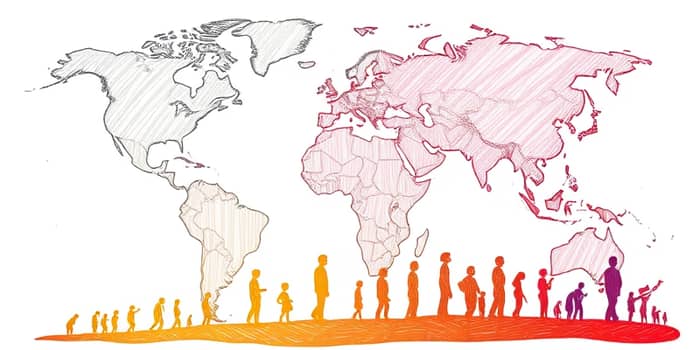
Demographic change is one of the defining forces shaping economies, societies, and markets in the 21st century. From surging youth populations in some regions to rapid aging in others, understanding these dynamics is critical for businesses and policymakers alike.
This article delves into the key trends, structural transformations, drivers, and implications of population shifts around the world. We explore how market demands are evolving and what strategies can help organizations thrive in a rapidly changing demographic landscape.
Global Population Trends & Projections
Global population growth has entered a new era. After centuries of rapid increase, numbers are forecast to peak at around 10.3 billion in 2084 and then ease back slightly to roughly 10.2 billion by 2100.
The reasons for this transition are complex, but the data are clear: the annual growth rate is slowing everywhere, and by the end of this century, we may witness an annual contraction of -0.13% in global headcount.
- Sub-Saharan Africa: Countries like Niger, Uganda, and Malawi could see populations nearly double by 2050.
- East Asia and Eastern Europe: Nations such as China, Japan, and Russia are now experiencing or entering population decline.
- China’s dramatic shift: A projected loss of over 200 million people by 2100, shrinking its workforce and consumer base.
These regional contrasts underscore the uneven nature of demographic change and its profound implications for global markets.
Structural Demographic Changes
The classic population pyramid is giving way to a modern obelisk shape, reflecting a dramatic redistribution of age cohorts. Youth populations shrink while older generations swell, signaling a fundamental transforming age structures across societies.
Alongside rising median ages, the share of working-age individuals is shrinking. In advanced economies and China, the proportion of people aged 15–64 is set to decline from roughly 67% today to 59% by 2050. This shift raises the dependency ratios are on the rise, pressuring pension and support systems worldwide.
Drivers of Demographic Shifts
Three principal forces are driving these transformations:
- Falling fertility rates: More than half of the global population lives in countries with fertility below the replacement level of 2.1 children per woman.
- Rising life expectancy: Advances in healthcare have boosted longevity, increasing the proportion of older, retired individuals.
- Migration: While migrant inflows help offset declines in some developed regions, they are insufficient to fully reverse aging trends.
By 2050, average global fertility is projected to dip below replacement, compounding the effects of longer life spans and shifting the balance of age groups further toward older cohorts. This persistent trend will redefine labor markets and social structures.
Market Evolution: Economic and Societal Impacts
As populations age and shrink in many regions, economies face both risks and opportunities. Businesses must adapt to an increased importance of automation and AI to sustain productivity in the face of labor shortages.
- Labor shortages: Fewer working-age adults challenge companies to fill roles and maintain growth.
- Shifting consumption: Older consumers will drive one-quarter of global consumption by 2050—double their share from 1997.
- Systemic pressure: Pension, healthcare, and social safety nets strain under the weight of expanding elderly cohorts.
Automation and robotics may boost output, but they also risk labor displacement. Sustainable growth will require policies that balance productivity gains with workforce reintegration and retraining initiatives.
Regional Case Studies
United States: With an estimated 343.6 million people in 2025 and a median age of 38.5, the US will see more deaths than births by 2036. Without immigration, its population growth would stall, even as 4.2 million Americans reach retirement age in 2025.
China: Once the global growth engine, China’s median age has jumped from 28.9 to nearly 39 in just 25 years. Its forthcoming population contraction poses significant challenges for both labor supply and domestic demand.
India: Now the world’s most populous nation, India is projected to peak at 1.7 billion in 2061 before a gradual decline. A relatively younger age structure provides a window of opportunity for robust economic expansion, if leveraged effectively.
Implications for Business & Policy
Organizations and governments must rethink traditional models to succeed in this new era of demographic change. Key areas of focus include:
Adapting product portfolios and marketing strategies to emerging markets in sub-Saharan Africa and South Asia, where youthful populations offer growth potential.
Designing age-friendly technologies, retirement planning services, and healthcare solutions tailored to older consumers, who will constitute an increasingly large market segment.
Embracing policy innovations—such as flexible retirement ages, expanded parental leave, and targeted immigration programs—to stabilize workforce participation and dependency ratios.
Investing in lifelong learning initiatives and upskilling programs, recognizing that a multi-generational workforce demands continuous development and inclusion.
Reforming fiscal and social welfare systems through a new social contract or system redesign that recognizes longer life spans and fluctuating support ratios, ensuring intergenerational equity.
Ultimately, demographic trends present a dual narrative of challenge and opportunity. Markets will recalibrate around older consumer segments in mature economies, even as youthful populations in developing regions emerge as vital engines of growth. Navigating this complex landscape requires foresight, innovation, and a commitment to adapt policies and business models to the realities of an evolving global population.
By understanding these patterns and preparing proactively, leaders can position themselves and their organizations to thrive, ensuring that demographic shifts become a catalyst for sustainable, inclusive progress rather than a source of disruption alone.
References
- https://www.caixabankresearch.com/en/economics-markets/labour-market-demographics/demography-and-destiny-world-awaits-us-2050-fewer
- https://explodingtopics.com/blog/demographic-transition-statistics
- https://www.pewresearch.org/short-reads/2025/07/09/5-facts-about-how-the-worlds-population-is-expected-to-change-by-2100/
- https://www.mckinsey.com/mgi/our-research/dependency-and-depopulation-confronting-the-consequences-of-a-new-demographic-reality
- https://www.visionofhumanity.org/after-the-peak-challenges-of-a-shrinking-world/
- https://www.worldometers.info/demographics/world-demographics/
- https://www.un.org/en/global-issues/population
- https://www.cbo.gov/publication/61164
- https://www.imf.org/en/publications/fandd/issues/2024/09/picture-this-demographic-decline-andrew-stanley