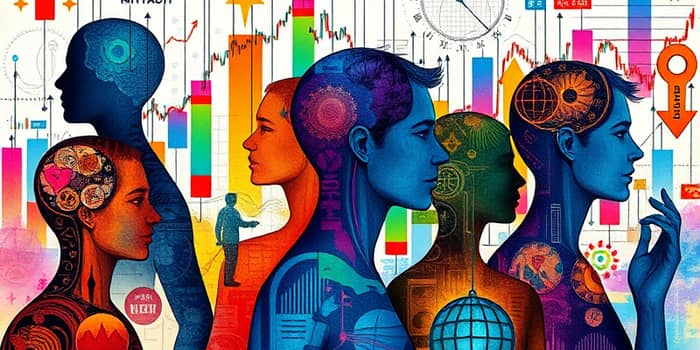
In today’s rapidly evolving markets, understanding consumer behavior is no longer a luxury—it's a necessity. Traditional economic models assume rational actors, yet real-world decisions often defy these assumptions. Behavioral economics bridges this gap by integrating psychological insights into market intelligence.
Definition and Core Principles of Behavioral Economics
Behavioral economics is an interdisciplinary field that combines psychology and economics to explain how individuals make financial and consumption choices. Unlike classical economics, which relies on perfect information and rationality, behavioral economics examines how biases, emotions, and social factors distort decision-making.
Key principles include:
- Cognitive biases shape every decision. Systematic patterns of deviation undermine pure rationality.
- Mental shortcuts guide human judgment. Heuristics help people decide under uncertainty.
- Present bias influences immediate gratification. People prefer rewards now over larger future gains.
- Loss aversion drives risk-averse behavior. Losses hurt more than equivalent gains please.
Why Behavioral Economics Matters in Market Intelligence
Market intelligence thrives on accurate predictions of consumer choices. By acknowledging human quirks, businesses gain an edge in anticipating trends and designing strategic interventions. Behavioral economics reveals hidden drivers of consumer choices that traditional surveys often miss.
When firms leverage these insights, they can:
- Enhance targeting and segmentation by tailoring messages to distinct behavioral profiles.
- Improve market forecasts and trend predictions through models that account for systematic biases.
- Boost customer satisfaction and loyalty by aligning products with genuine preferences.
Key Behavioral Economics Concepts Applied to Marketing and Sales
Implementing behavioral economics in marketing requires familiarity with core concepts. Below is a summary table of principal ideas and applications:
Real-World Applications and Examples
Companies across industries apply behavioral economics to refine strategies:
Marketing campaigns harness framing effects to convey value. For instance, labeling yogurt as "90% fat-free" tends to outperform "10% fat" in consumer tests. Retailers use scarcity by showing low stock counts, driving a spike in conversions.
In sales, anchoring lifts perceived savings. Presenting a $200 original price next to a $150 sale price makes the discount feel significant. Businesses leverage loss aversion by stressing what customers might lose by delaying a purchase, such as missing an exclusive offer.
Beyond commerce, public policy has benefited: the "Save More Tomorrow" retirement plan secures higher savings rates by automatic enrollment and gradual increases. Organ donation programs have seen sign-up surges by adopting opt-out defaults, illustrating the power of gentle nudges.
Impact and Results: Quantitative Evidence
Empirical studies demonstrate the value of behavioral interventions in business contexts:
- $30M increase in annual revenue for a major North American insurer after creating a behavioral science group.
- 52% lift in monthly users on a national mental health platform following a design overhaul guided by behavioral insights.
- 75% reduction in design time at a leading smartphone manufacturer by integrating behavioral science into product development.
- 46% decrease in drop-off rates for a debt consolidation service through targeted nudges.
Challenges and Ethical Considerations
Despite clear benefits, adopting behavioral economics poses hurdles. Organizations often struggle with data availability and quality, making it hard to infer true consumer preferences. Cross-departmental collaboration is essential but can be stymied by silos between marketing, analytics, and design teams.
Ethically, firms must avoid manipulative tactics. The goal is to create win-win situations for consumers, enhancing welfare rather than exploiting vulnerabilities. Transparency in how data is used and how interventions work fosters long-term trust.
Future Trends and Opportunities
The fusion of behavioral economics with advanced analytics and AI promises unprecedented market intelligence. Machine learning models that integrate psychological factors can yield deeper, more adaptive consumer insights. This interdisciplinary approach will extend beyond B2C marketing into healthcare, environmental policy, and non-profit fundraising.
Moreover, B2B firms stand to gain by recognizing that businesses comprise individuals driven by the same biases. Tailoring sales pitches and contract structures with behavioral principles can strengthen negotiations and partnerships.
Key Takeaways for Marketers and Business Leaders
Behavioral economics offers a powerful lens for decoding the complexities of consumer minds. By embedding psychological insights into market research and strategy, organizations can:
- Understand hidden behavioral triggers that govern purchase decisions.
- Design more effective marketing interventions that resonate emotionally.
- Build trust through ethical nudges that respect consumer autonomy.
- Foster cross-functional collaboration to implement insights successfully.
Ultimately, merging psychology with data analytics transforms market intelligence from mere observation to strategic influence—paving the way for innovation, growth, and sustainable customer relationships.
References
- https://www.digivate.com/blog/digital-marketing/behavioural-economics-marketing/
- https://econreview.studentorg.berkeley.edu/applying-behavioral-economics-to-marketing-policy-and-beyond/
- https://businessstories.sandiego.edu/behavioral-economics-understanding-the-mind-of-the-consumer-through-business-analytics
- https://thedecisionlab.com/insights/business/3-applications-of-behavioral-economics-in-the-real-world
- https://www.breakcold.com/explain/behavioral-economics-in-sales
- https://insights.som.yale.edu/insights/rethinking-marketing-and-customers-lessons-from-behavioral-economics
- https://www.seerinteractive.com/insights/incorporating-behavioral-economics-into-your-marketing-strategy
- https://www.crresearch.com/blog/the-implications-of-behavioral-economics-on-market-research/
- https://news.uchicago.edu/explainer/what-is-behavioral-economics
- https://noldus.com/applications/behavioral-economics
- https://hawkpartners.com/behavioral-economics/behavioral-economics-changing-marketing-know/
- https://www.chicagobooth.edu/mba/academics/masterclass/videos/behavioral-economics-applications-devin-pope
- https://pmc.ncbi.nlm.nih.gov/articles/PMC3680155/
- https://www.nber.org/papers/w7948